Local Engineering Asphalt Paving Challenges Specific to Spring Hill
Spring Hill is one of the fastest-growing cities in Johnson County, but growth built on expansive clay creates a set of pavement problems that don't surface until years after construction. Rolling terrain, rapid commercial buildout, and a lot inventory dominated by 10–15-year-old surfaces define the challenge here.
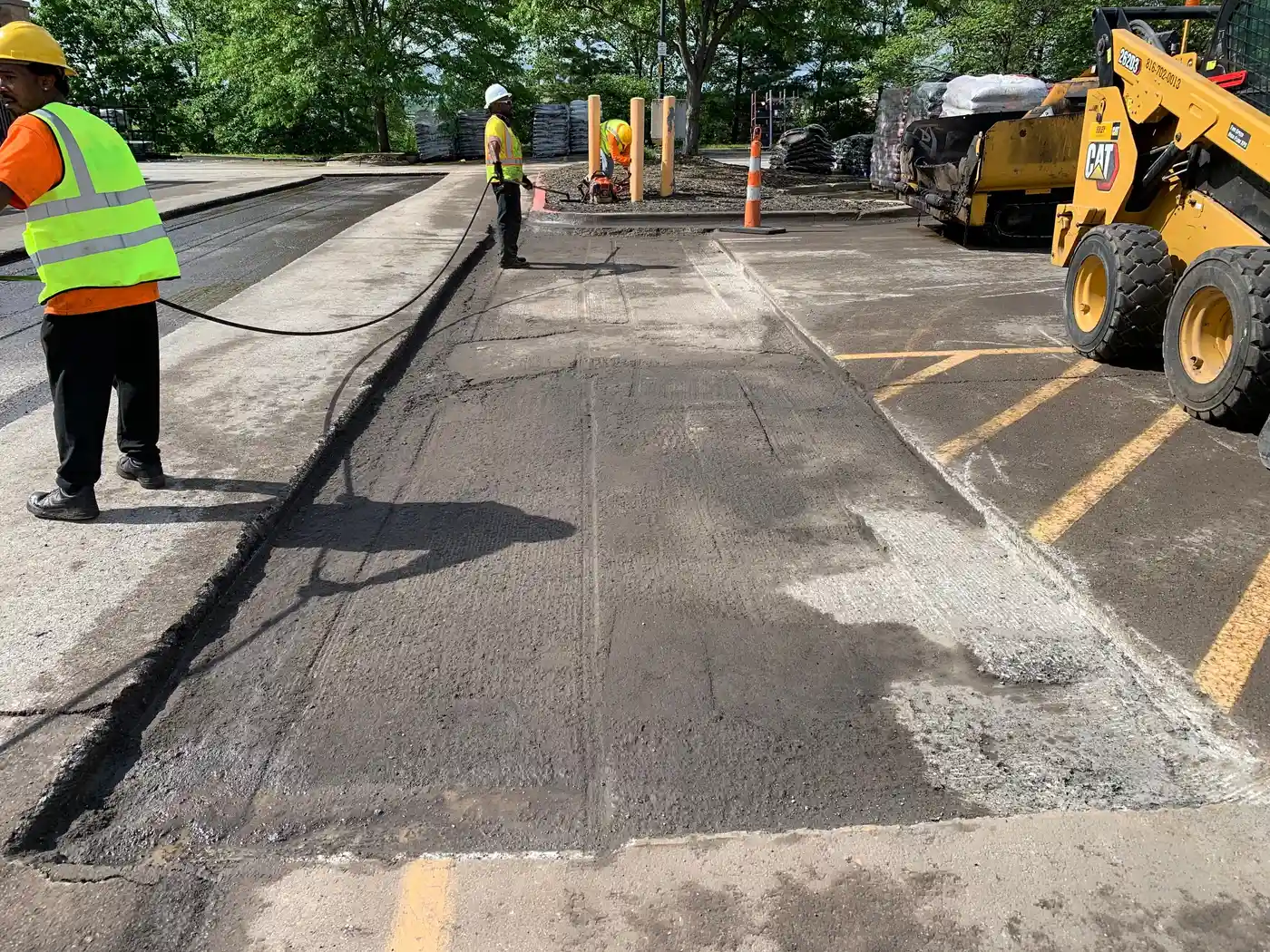
- Expansive Clay Under New Construction. Spring Hill's commercial pads sit on the same heavy expansive clay that defines southern Johnson County. This clay swells 3–5% with seasonal moisture, heaving concrete slabs and pumping fines into asphalt base layers. Geotextile separation and properly compacted limestone bases are the only defense.
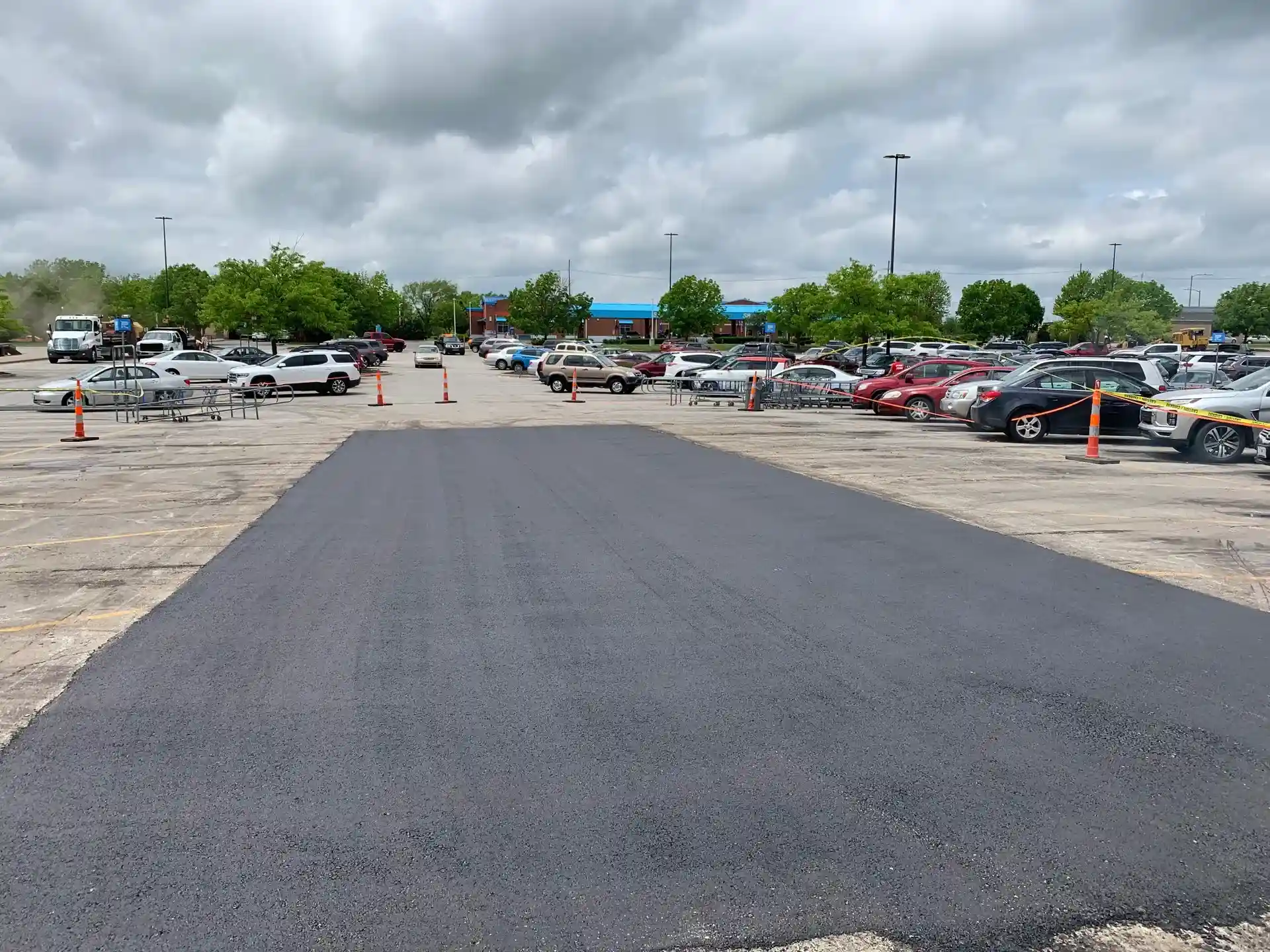
- Lots Entering Their First Maintenance Window. Nearly all commercial pavement in Spring Hill was built after 2010. That puts the entire inventory in the 10–15-year preventive maintenance window simultaneously — the exact point where a $0.15/sq ft sealcoat prevents a $3.50/sq ft overlay five years later.
- Rolling Terrain and Drainage Complexity. Unlike the flat topography of cities further north in Johnson County, Spring Hill's rolling terrain channels stormwater aggressively across parking surfaces. Lots built without adequate curb reveal or catch basin capacity see edge erosion and base saturation within a few years.
- Rapid UV Degradation in Open-Exposure Lots. Spring Hill's commercial zones lack the mature tree canopy found in older Johnson County cities. Full sun exposure accelerates asphalt oxidation, turning binder brittle and causing aggregate loss faster than shaded surfaces in cities like Olathe or Lenexa.
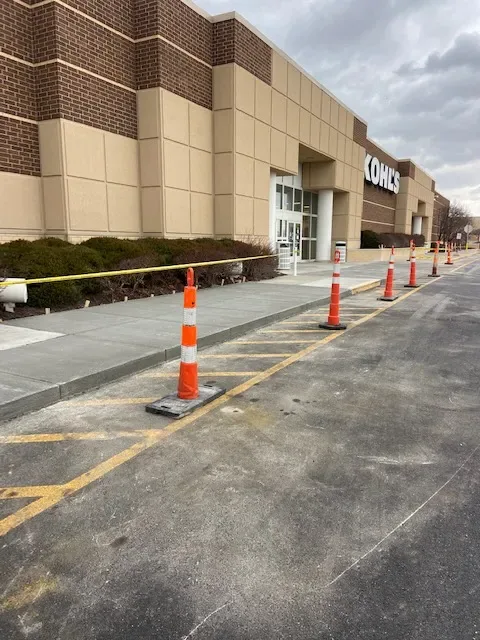
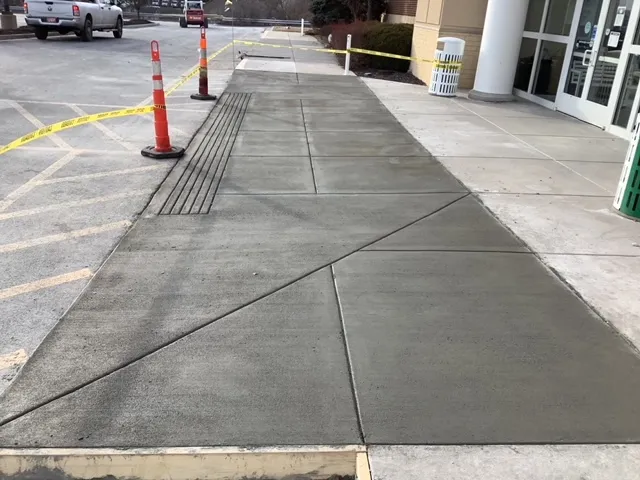
- Concrete Heaving at Transition Zones. Where new commercial pads meet subdivision infrastructure — sidewalks, curb ramps, utility pads — concrete heaving from clay expansion is already visible in Spring Hill. These transition joints require isolation details and flexible sealant to prevent trip hazards and water infiltration.
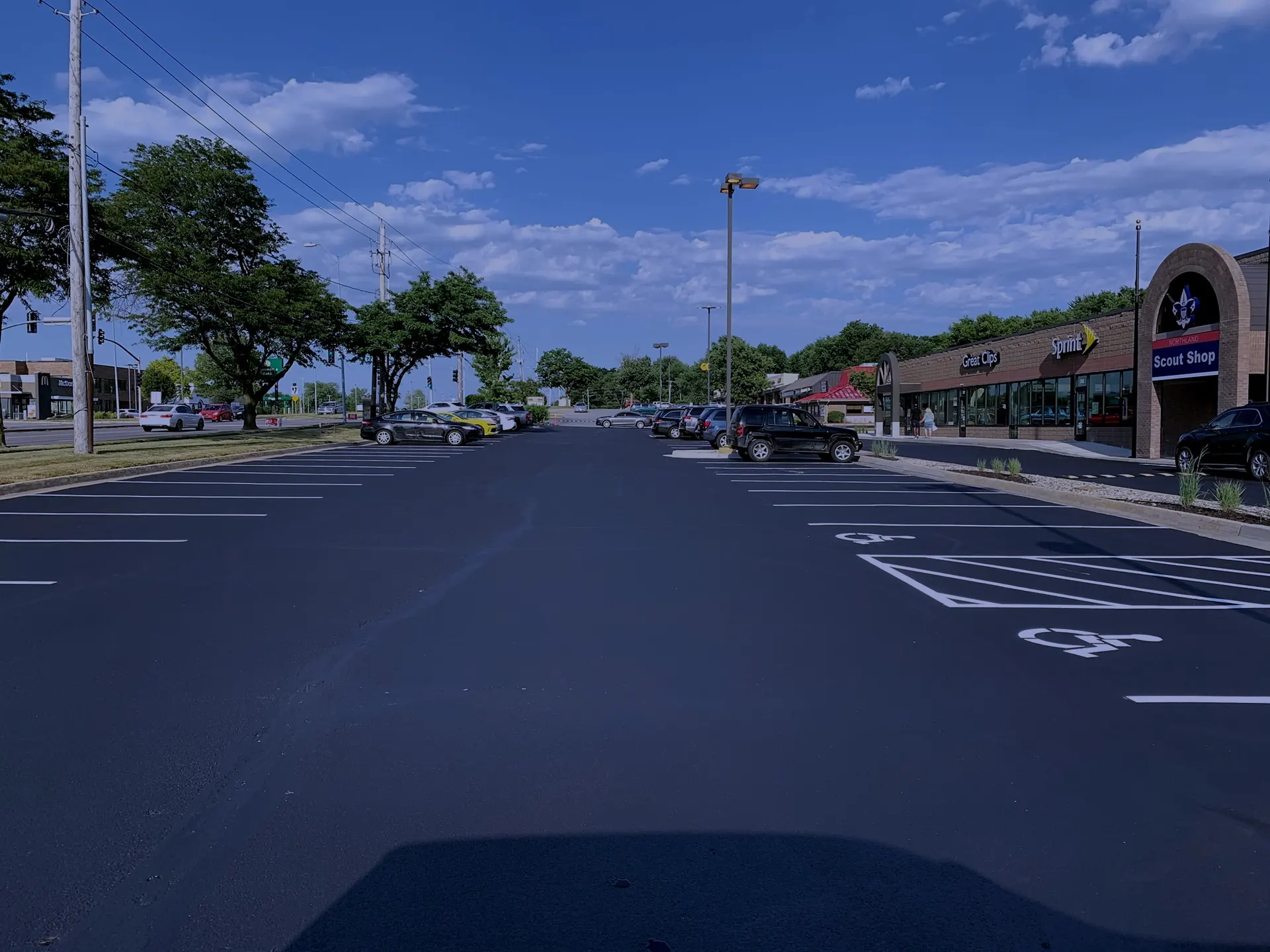
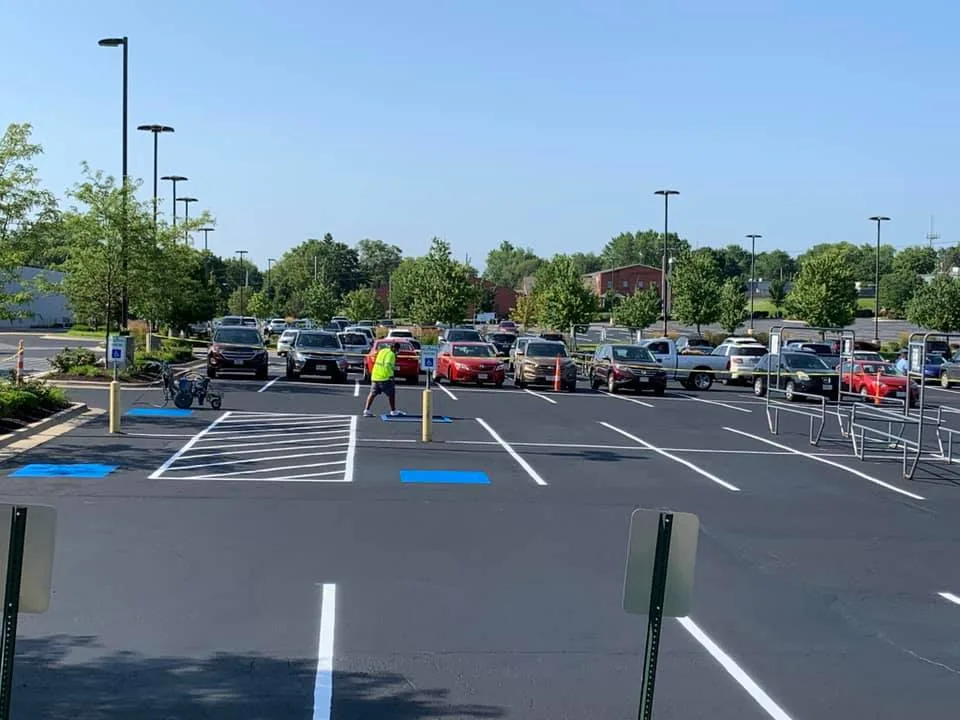
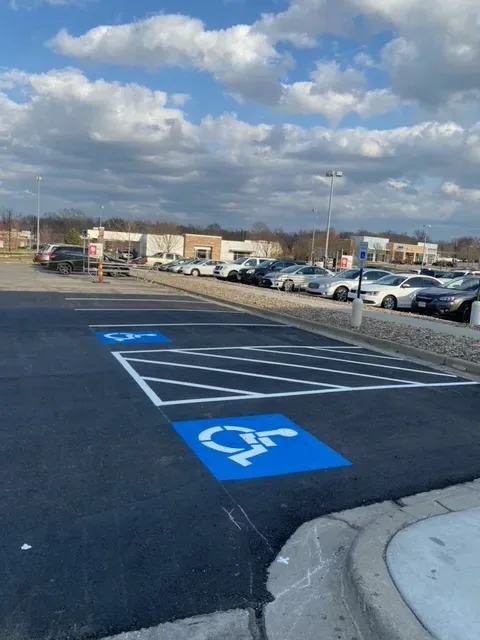
- Faded Striping on Young Lots. Retail lots along the 169 Highway Corridor show significant striping fade after just 2–3 years. High UV, open exposure, and the abrasive action of parking-lot sweepers strip latex paint faster than expected, requiring thermoplastic upgrades for durability.