Parking Lot Accessories
Bollards, wheel stops, speed bumps, and traffic calming hardware for commercial parking lots across the KC metro.
Parking Lot Accessories Platinum Paving Installs
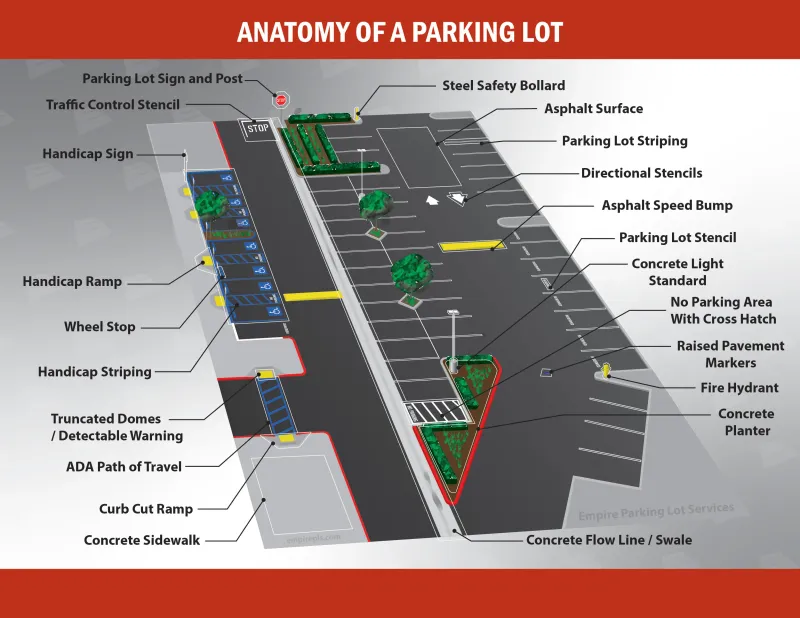
A finished parking lot needs more than asphalt and striping. Platinum Paving installs the accessories that keep your lot safe, organized, and code-compliant: steel and concrete bollards to protect storefronts and utility equipment, rubber and concrete wheel stops to prevent vehicle overrun, speed bumps and speed humps for traffic calming, and signage posts for ADA, fire lanes, and reserved spaces. Every installation is anchored to the pavement surface and positioned to local code standards. Because we also handle the asphalt paving, sealcoating, and striping, accessory installation can happen in the same mobilization — one crew, one schedule, no extra trip charge.
When to Add Accessories to Your Parking Lot
Most property managers add bollards after a vehicle damages a storefront, utility box, or gas meter — but the smart play is installing them before an incident creates a costly repair and potential liability claim. Speed bumps and humps make sense whenever vehicle speeds in your lot are a safety concern — apartment complexes, retail centers with heavy pedestrian traffic, and any lot where drivers tend to cut through at road speed. Wheel stops should be installed along sidewalks, storefronts, and landscaping where vehicle overrun creates damage or pedestrian hazards. Platinum Paving can assess your lot and recommend the right accessories as a standalone project or bundled with any paving, sealcoating, or striping work.
Bollard Types and Where They Belong
Steel pipe bollards are the standard for protecting storefronts, gas meters, and building-mounted HVAC equipment. Filled with concrete and painted safety yellow, a 4-inch schedule-40 steel bollard stops a 5,000-lb vehicle at parking-lot speeds. We install them on 4-foot centers in front of storefront glass and on 3-foot centers around utility equipment where code requires impact protection. Concrete bollards serve the same purpose but fit better in pedestrian plazas and entryways where appearance matters — they can be formed to match your building's existing concrete finishes. Removable bollards use a buried receiver sleeve so the post can be lifted out for temporary access — loading zones, emergency lanes, and seasonal vendor areas are the most common applications. We size, space, and anchor every bollard to meet ASTM F2656 crash-rated standards when the application requires it.
Speed Bumps vs Speed Humps — Choosing the Right Traffic Control
Speed bumps are aggressive — they force vehicles to near-stop. They work best in parking stall aisles, loading zones, and anywhere speed needs to drop below 5 mph. The abrupt profile (3–6 inches tall over 12 inches of travel) is effective but can cause complaints from drivers and discomfort for passengers. Speed humps are gentler. They span 12–14 feet of pavement with a gradual rise, designed to slow traffic to 15–20 mph without a jarring impact. Apartment communities, office park drive lanes, and retail collector roads are typical applications. Both options come in rubber (bolted to existing pavement) or asphalt (built into the surface during paving). Rubber speed bumps install in under an hour and can be repositioned later. Asphalt humps are permanent and blend with the lot surface, making them a better long-term choice for new construction projects.
ADA and Fire Lane Signage Requirements
Every commercial parking lot in Kansas and Missouri must display specific signage to remain code-compliant. ADA accessible parking signs must be mounted on posts at a minimum height of 60 inches from the ground surface to the bottom of the sign, and each accessible space needs a sign — including van-accessible designations where required. Fire lane signs must be posted at intervals specified by the local fire marshal, typically every 50–100 feet along fire lane curbs. Platinum Paving installs MUTCD-compliant signs on standard steel U-channel posts, set in concrete footings or surface-mounted with bolt-down flanges. We coordinate signage placement with line striping and ADA compliance work to make sure paint, signage, and ramp locations all match current code requirements in a single visit.
How Parking Lot Accessories Are Installed
Bollards are either core-drilled into existing concrete and epoxy-anchored, or set in fresh concrete during a new pour. Wheel stops are pinned to the asphalt or concrete surface with rebar stakes driven through pre-drilled holes — two stakes per stop for concrete, three for asphalt. Speed bumps are bolted to the pavement with expansion anchors spaced at 12-inch intervals. All installations are performed by our 30-person crew during normal paving or maintenance projects — no separate mobilization needed if we are already on-site. Standalone accessory projects are typically completed in a single day. We set all post footings, anchor all hardware, and verify ADA clearances before leaving the site. Call (913) 701-6044 for a free estimate.
Accessories We Install
Bollards
Steel pipe and concrete bollards to protect storefronts, utility meters, gas lines, and pedestrian areas from vehicle impact. Filled with concrete, capped with high-visibility yellow safety caps.
Wheel Stops
Concrete and rubber wheel stops pinned to the pavement surface to prevent vehicle overrun into sidewalks, landscaping, and storefronts. Rebar-staked for a secure hold.
Speed Bumps & Humps
Rubber and asphalt speed bumps and humps for traffic calming in drive aisles, apartment communities, and retail lots. Modular rubber or permanent asphalt builds available.
Delineator Posts
Flexible and rigid delineator posts to separate traffic lanes, mark pedestrian walkways, protect loading zones, and guide traffic flow through your lot.
Signage Posts
ADA signs, fire lane signs, reserved parking signs, and custom signage mounted on standard steel posts to local code specifications.
Parking Lot Accessory Questions
How long does it take to install bollards in a parking lot?
Most bollard installations take one day. A typical retail storefront protection project — 4 to 8 bollards — can be completed in a few hours. Larger projects with 20+ bollards across multiple buildings may take two days. If we are already on-site for paving or concrete work, bollard installation is folded into the same schedule at no extra mobilization cost.
What is the difference between speed bumps and speed humps?
Speed bumps are shorter and more aggressive — they force vehicles to slow to 5 mph or less. They work best in parking garages and small lots where you need a hard stop. Speed humps are wider and more gradual, allowing vehicles to cross at 15-20 mph. They are the standard choice for apartment communities, office parks, and retail lots where you need traffic calming without a jarring stop.
Do I need wheel stops if my lot already has curbing?
It depends on the layout. If your lot has raised curbs along sidewalks and landscaping, wheel stops may not be needed in those areas. But many commercial lots have flush transitions between parking spaces and sidewalks or storefronts — that is where wheel stops prevent vehicle overrun. We will assess your lot and recommend wheel stops only where they are actually needed.
Can you install accessories on an existing lot without repaving?
Yes. All of our parking lot accessories can be installed on existing asphalt or concrete surfaces. Bollards are core-drilled and epoxy-set, wheel stops are rebar-pinned, speed bumps are bolted down, and delineator posts are adhesive-mounted or bolt-down. No repaving required. If the surface is in poor condition, we may recommend patching the anchor points first for a solid hold.
Get a Free Estimate on Parking Lot Accessories
Tell us what you need and we'll provide a quick quote — or call (913) 701-6044.
Parking Lot Accessories FAQs
How long does it take to install bollards in a parking lot?
A typical bollard installation takes 30 to 45 minutes per post. Core-drilling into existing concrete, setting the bollard, and filling with epoxy or grout is the standard process. For a row of 6 to 8 bollards in front of a storefront, plan for a half-day on site. If we are already on-site for paving or striping work, bollard installation adds minimal time to the overall project.
Are wheel stops required by code in Kansas or Missouri?
Neither Kansas nor Missouri state code mandates wheel stops in every parking stall. However, local jurisdictions often require them along sidewalks, storefronts, and landscaped areas where vehicles could overrun the pavement edge. ADA-accessible parking spaces require clear access aisles — wheel stops help prevent vehicles from encroaching on those aisles. Check your local fire marshal and planning department requirements, or we can review compliance during your free on-site assessment.
Can you install speed bumps on an existing asphalt lot without repaving?
Yes. Rubber speed bumps bolt directly to existing asphalt or concrete using expansion anchors — no repaving needed. The installation takes about an hour per bump, including drilling anchor holes and securing the hardware. Asphalt speed humps require hot-mix asphalt placed on the existing surface, which means we need ambient temperatures above 50 degrees. Both options work on existing lots without any tear-out.
Do you remove and replace old or damaged bollards?
We do. Damaged steel bollards can usually be cut at the base and a new post set in the same footing with fresh epoxy. If the concrete footing itself is compromised, we excavate, pour a new footing, and set the replacement. The turnaround is the same day for most single-bollard replacements.
Need Bollards, Wheel Stops, or Speed Bumps?
Platinum Paving installs all parking lot accessories as standalone projects or bundled with paving and maintenance work. One call, one contractor, one warranty.